Powered by Blogger.
Showing posts with label misinformation. Show all posts

Friday, February 18, 2022

The new newsrooms

It has been very interesting for me to read and learn more about the new newsrooms. A couple of weeks ago, a friend asked me about the future of journalism. In Brazil, 12 big media organizations closed in 2021, and many magazines and centennial newspapers have stopped their print version to become online outlets. Despite the costs and financial issues, we also talked about how to make newsworthy content in an age where information comes from many different sources and social media in real-time. 

Credit: Pixabay
My answer was that to stand out, journalists and newsrooms have to engage more with the audience, know their needs, and address the information directly to them. I haven’t made that connection yet, but now I notice how it relates to local and nonprofit news, as well as activist journalism.

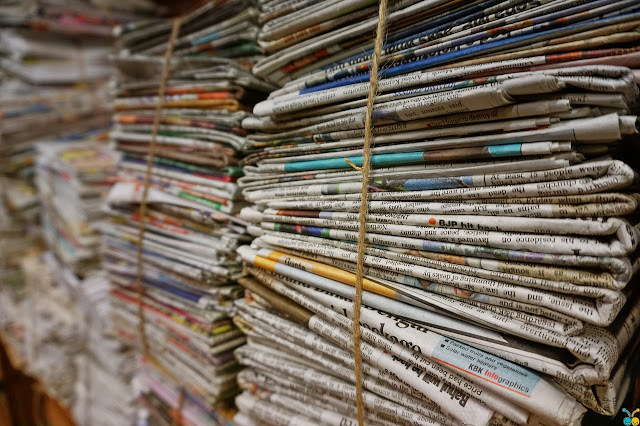
I realized how powered the local news is to connect us to our community and neighbors and give voice to what wouldn’t be covered by the big media. Unfortunately, according to The U.S. News Deserts Database, 1,800 communities in the US have lost their local newsroom since 2004. Besides, the article “The death knell for local newspapers? It’s perilously close” by Margaret Sullivan published in The Washington Post mentioned that more than 2,000 local newspapers have gone out of business in the last 15 years. 

That contributes to a less informed public, which leads to less civic engagement and public polarization – and it is exactly what we can see both here and in Brazil. 

That is why nonprofit newsrooms are so important and are helping to fill these gaps. They have been producing content focused on one or a few society’s problems, providing in-depth coverage, and also opening space for an inclusive and diverse staff. Another positive point is that they are in essence trustful, nonpartisan and focused on facts, and transparent about their funding and commercial media. 

All that work seems to be promising. Audiences grew and journalism has served more people as third-party outlets published the content produced by nonprofit news organizations. In addition, the number of nonprofit outlets has been increased at an average pace of a dozen or more a year since 2008. 

Activism Journalism
In my opinion, one of the reasons they are growing and reaching more people is because of activism journalism. I agree with Gwen Lister when she says here that activism can be combined with journalism, in terms of causes, whatever those causes may be. The public likes to see their stories, struggles, and problems on media; they want to feel represented. 

Credit: Pixabay

I see it similarly as employing bias in journalism. Everyone has a bias, but it doesn’t mean that when producing content, a journalist won’t follow the objective process of journalism. 

An activist journalist can be subjective when choosing things to cover but verify the information and follow fair practices and writing rules. 

To sum up, I would highlight Gwen Lister’s opinion about one of the challenges of journalism today. “We mustn’t let our standards slip because of the digital tsunami and social media onslaught that is pointing people in the direction of entertainment and clickbait.” 

As I answered my friend when we are discussing the future of journalism, we need to break through those challenges (social media, mis- and disinformation) with serious journalism because it makes a real difference in people’s lives. 

References:

Kohli, Anisha 2022, ‘We wanted to be the voice of the voiceless people of Namibia’, International Consortium of Investigative Journalists, accessed 18 February 2022, <https://www.icij.org/inside-icij/2022/02/we-wanted-to-be-the-voice-of-the-voiceless-people-of-namibia/>.

Sullivan, Margareth 2019, The death knell for local newspapers? It’s perilously close, The Washington Post, accessed 18 February 2022, <https://www.washingtonpost.com/lifestyle/style/the-death-knell-for-local-newspapers-its-perilously-close/2019/11/21/e82bafbc-ff12-11e9-9518-1e76abc088b6_story.html>.


*This article was submitted as a memo assignment for the course "Current Issues of Journalism" at the University of Illinois.
Published: By: Manu Ferreira - 2/18/2022 02:42:00 PM

Friday, February 11, 2022

Covering “Fake News” and disinformation


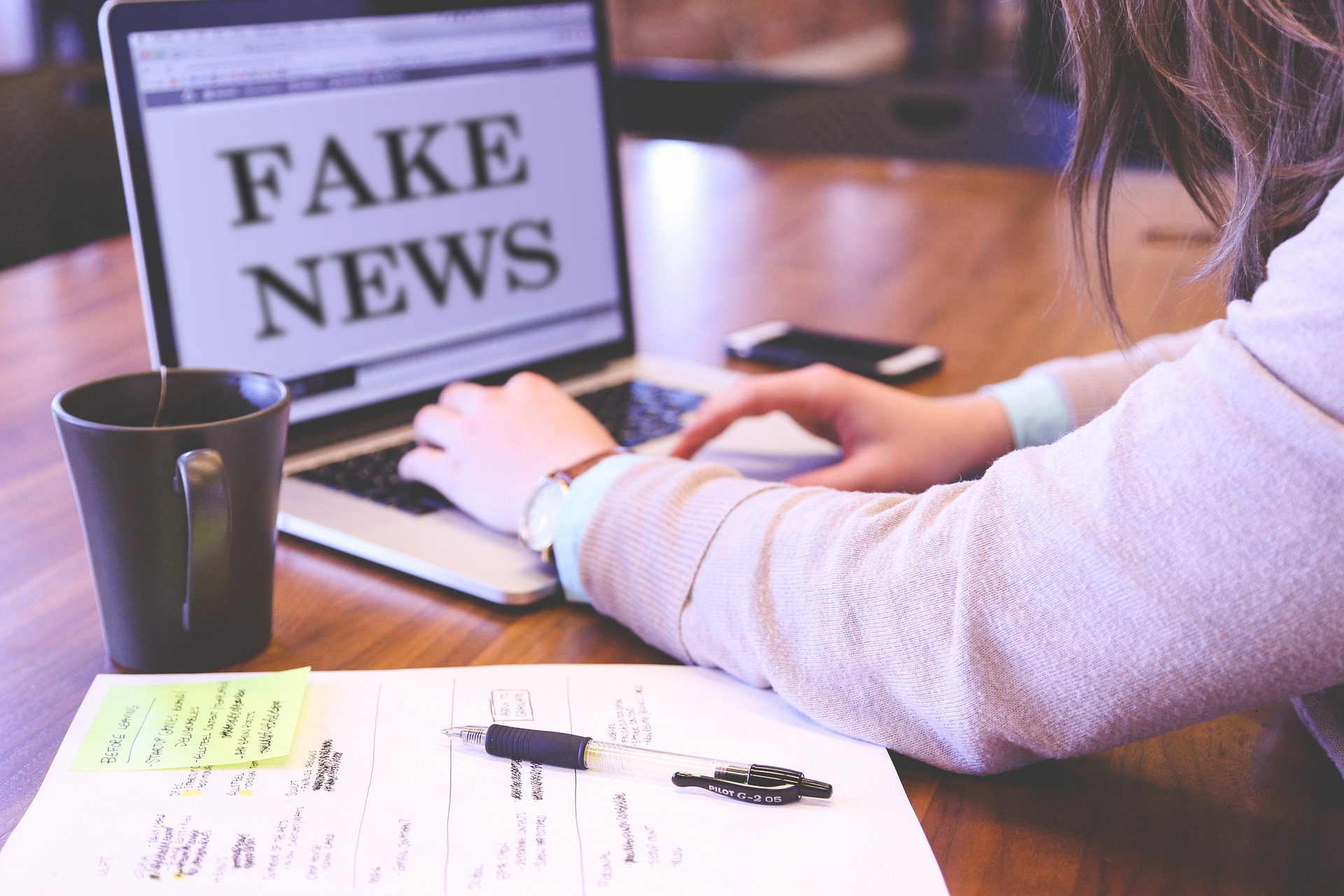
It is interesting to observe how the term “fake news” was created and how worldwide it became. Although the expression was first used by Donald Trump to undervalue unfavorable news about him, it turned into a much bigger problem that occurs in many different countries. And they all nominate it as fake news as well. 

Credit: Pixabay

The first point I recognized as important about this subject is to wrongly call it “fake news”. As Claire Wardle from First Draft said here, we have to be clear when we use that term. “Are we talking about disinformation? Are we talking about misinformation? Are we talking about pollution? Are we talking about propaganda?”. Otherwise, if we don’t be direct about it, we are just going to endorse the battle against the news industry and contribute to the generalized skepticism towards it reaffirming that it sells false information. 

Secondly, is the effect fake news has on making people believe in falsehoods, how it has changed their perception about truth, and their opinion of the importance of the news, of being well informed. The fact that part of the audience is dropping some outlets and consuming less information is a relevant risk to the media environment. Regardless of whether it is because they don’t like it or if that contradicts their bias, having a non-informed population is harmful to society overall. 

Propaganda and advertising

Speaking of disinformation, a topic that also highlighted to me was the use of propaganda and advertising in the form of news articles on media outlets. They look exactly the same, with headlines, photos, and polished writing, but are created by, or on behalf of, a paying advertiser. As a blog and magazine reader, I have seen thousands of these ads and haven’t given much value to them because I knew they weren’t 100% truthful. However, many people do not have the same understanding I do. 

Therefore, reading and thinking about it made me realize how this strategy called “native advertising”, but also tagged as “partner post” or “sponsored content”, can be prejudicial and deceive the public. Research studies have shown that those labels are ineffective at helping readers distinguish between an editorial and an advertising type of content. 

As an example, I will quote Michelle A. Amazeen’s article (Researchers looked at nearly 3,000 native ads across five years. Here’s what they found) published on Nieman Lab

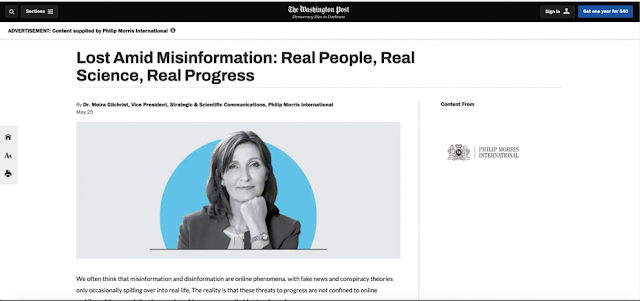
“Philip Morris International, the tobacco company, ran a native advertising campaign across many media outlets, including The Boston Globe, The New York Times, Reuters, and The Washington Post (…) about the ‘disinformation campaigns that muddy the truth’ regarding the benefits of vaping products while themselves muddying the truth.” 


Another concern is that this kind of text is made by journalists. Many media companies have now content studios just to create native advertising in the name of corporate clients. It is understandable that a company needs money to survive and that it comes mainly from ads. Nevertheless, they should be responsible for the kind of content they publish and aware that it also might influence real journalism. 

Lastly, I want to rebound on Claire Wardle’s opinion about the challenge for the next two years. In 2017 she said it was “going to be a mixture of new technologies and how manipulation and disinformation work on those platforms and through those technologies.” By now, in 2022 – five years later, it seems like the challenge she mentioned is still pertinent and will last longer in the future.

References:


Graham, David A. 2019, Some Real News About Fake News, The Atlantic, accessed 13 February 2022, <https://www.theatlantic.com/ideas/archive/2019/06/fake-news-republicans-democrats/591211/>.


Wang, Shan 2017, The scale of misinformation online is global. First Draft is pushing for more collaboration — and more research — as an antidote, Nieman Lab, accessed 13 February 2022, <https://www.niemanlab.org/2017/11/the-scale-of-misinformation-online-is-global-first-draft-is-pushing-for-more-collaboration-and-more-research-as-an-antidote/>


Berman, Nina 2017, The Victims of Fake News, Columbia Journalism Review, accessed 13 February 2022, <https://www.cjr.org/special_report/fake-news-pizzagate-seth-rich-newtown-sandy-hook.php>.


*This article was submitted as a memo assignment for the course "Current Issues of Journalism" at the University of Illinois.
Published: By: Manu Ferreira - 2/11/2022 02:17:00 PM